AI in Logistics: Transforming the Supply Chain from End-to-End
Artificial Intelligence

AI in Logistics: Transforming the Supply Chain from End-to-End

Sourav K R
Sourav K R
4 min read1,000 views
Published Date: Aug 7, 2025
Introduction:

The logistics revolution has already begun

AI in logistics is no longer a future concept. It is actively reshaping how supply chains operate today.

Global supply chains are under constant pressure from e-commerce growth, rising customer expectations, fluctuating fuel costs, and geopolitical uncertainties. Traditional systems struggle to keep up with this complexity. AI changes that by enabling real-time decision-making, predictive insights, and intelligent automation.

Research shows that companies using AI in logistics can reduce forecasting errors by up to 50 percent and lower inventory costs by 20 to 50 percent. The shift is already happening. Businesses that adopt early are gaining a significant competitive edge.

What is AI in Logistics?

AI in logistics refers to the use of machine learning, predictive analytics, and automation to improve supply chain operations.

It helps businesses:

  • Analyze large volumes of logistics data in real time
  • Predict demand and disruptions
  • Automate workflows and decisions
  • Optimize routes, inventory, and warehouse processes

Instead of reacting to issues, AI enables logistics companies to anticipate and prevent them.

Why AI is disrupting logistics now

AI in logistics is not just an emerging trend. It is a business necessity. Several factors are accelerating its adoption:
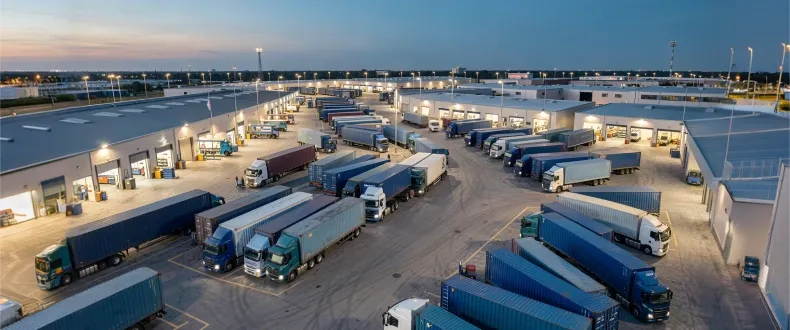
  • Explosion of E-commerce: The demand for faster, same-day deliveries has increased significantly. AI helps manage last-mile complexity and delivery efficiency.
  • Data Overload: Logistics generates massive datasets from shipments, sensors, and transactions. AI turns this into real-time actionable insights.
  • Rising Costs Fuel: labour and compliance costs are increasing. AI reduces inefficiencies and operational waste.
  • Sustainability Goals: AI-driven route optimisation reduces fuel consumption and carbon emissions.
AI in Logistics Transforming the Supply Chain from End-to-End

10 high-impact AI use cases in logistics

1. Dynamic Route Optimization

AI evaluates traffic, weather, and delivery constraints in real time to determine the most efficient routes. For example, companies like UPS use AI systems to reduce fuel consumption and improve delivery speed, saving millions annually.

2. Autonomous Delivery Vehicles

Self-driving trucks and drones are transforming last-mile delivery. These systems reduce dependency on human drivers and improve delivery efficiency in high-demand regions.

3. Predictive Maintenance

AI monitors vehicle and equipment health using sensor data. It detects early signs of failure, reducing downtime and preventing costly breakdowns.

4. Real-Time Freight Tracking

AI enhances tracking by predicting delays and providing accurate delivery updates. This improves transparency for both businesses and customers.

5. AI-Driven Demand Forecasting

Machine learning models analyze historical data, seasonal patterns, and external signals to forecast demand accurately, helping reduce overstocking and stockouts.

6. Warehouse Automation

AI-powered robotics streamline picking, packing, and sorting. This increases speed, reduces errors, and improves warehouse productivity.

7. Smart Inventory Management

AI dynamically adjusts inventory levels based on demand patterns, improving stock availability while reducing holding costs.

8. Smart Customs Clearance

AI automates document verification and compliance checks, reducing delays in cross-border logistics.

9. AI-Enhanced Customer Support

AI chatbots handle shipment queries, provide updates, and resolve issues instantly, improving customer experience.

10. Fraud and Risk Detection

AI identifies anomalies in transactions and shipment data to detect fraud, theft, or cargo tampering early.
Benefits of AI in logistics

  • Cost Savings: AI reduces operational expenses through automation and optimization.
  • Faster Deliveries: Real-time decision-making improves delivery timelines and reliability.
  • Better Resource Utilisation: Optimises warehouse space, workforce, and transportation.
  • Sustainability: Reduces fuel consumption and emissions through efficient planning.
  • Improved Customer Experience: Provides real-time visibility and proactive communication.
AI in Logistics Transforming the Supply Chain from End-to-End

The future of AI in logistics

  • AI with Blockchain will create fully transparent and tamper-proof supply chains.
  • Agentic AI will enable real-time decision-making during disruptions.
  • Fully Autonomous Supply Chains will run with minimal human oversight.

Challenges of implementing AI in logistics

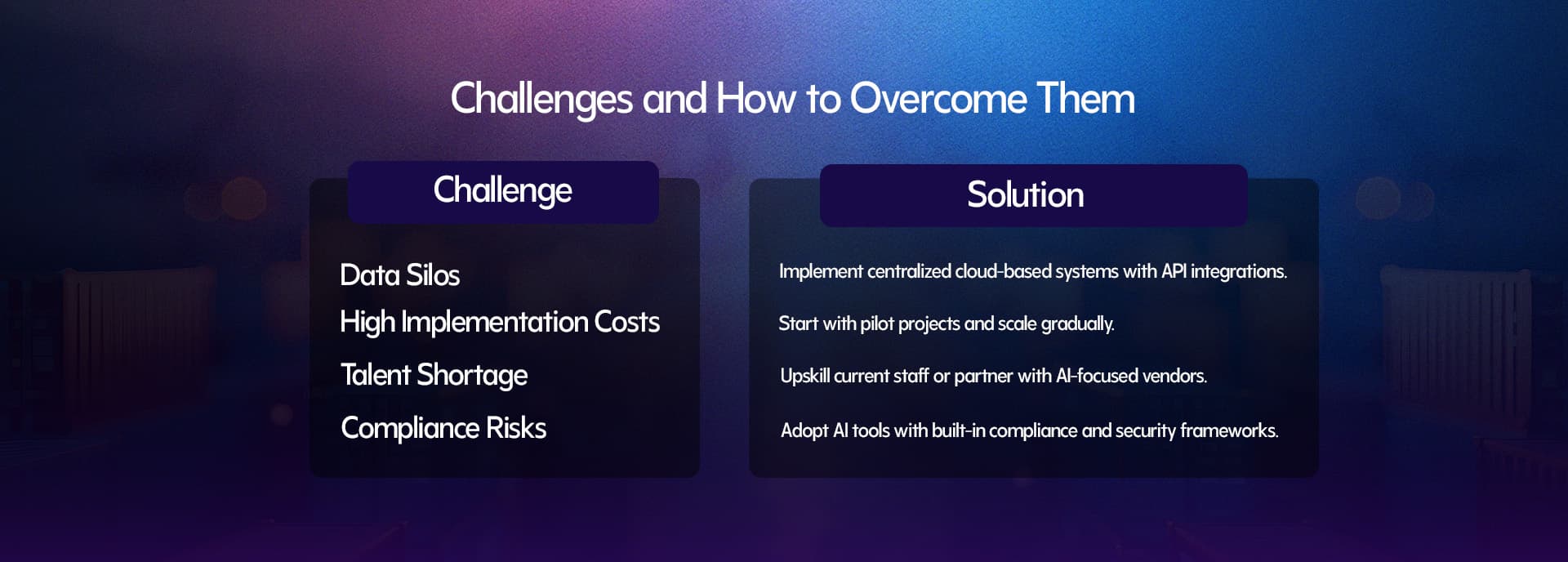
While AI offers strong benefits, implementation comes with challenges:

  • High initial investment in technology and infrastructure
  • Integration with legacy systems
  • Data quality and availability issues
  • Requirement for skilled AI talent
  • Organizational resistance to change

Companies that overcome these challenges early gain long-term competitive advantages.

Real-world applications of AI in logistics (practical view)

Leading logistics companies are already leveraging AI:

  • UPS uses AI for route optimization, saving fuel and reducing delivery time
  • Amazon uses AI in warehouse automation and demand forecasting
  • DHL leverages AI for predictive logistics and supply chain visibility

These examples show that AI is not theoretical. It is already delivering measurable results.

The future of AI in logistics

AI with Blockchain

Combining AI with blockchain will create transparent and secure supply chains.

Agentic AI

AI systems will make autonomous decisions during disruptions in real time.

Fully Autonomous Supply Chains

End-to-end logistics operations will run with minimal human intervention.

How to implement AI in logistics

For businesses planning to adopt AI:

  • Identify high-impact use cases like route optimization or forecasting
  • Ensure data is clean, structured, and accessible
  • Start with pilot implementations
  • Use custom AI solutions aligned with your workflows
  • Continuously monitor and optimize performance

How 2Base Technologies helps logistics businesses

At 2Base Technologies, we help logistics and supply chain companies implement AI solutions that deliver real operational impact.

Our expertise includes:

  • AI-powered route optimization
  • Predictive analytics for demand and supply chain planning
  • Warehouse automation systems
  • Custom AI model development
  • Seamless integration with existing logistics platforms

We focus on building scalable, practical solutions tailored to your business needs.

Tags:Artificial IntelligenceAI in LogisticsSupply Chain Optimization

Related Insights

Fleet Capacity Becomes Financial Control When Operational Intelligence is Unified

Fleet Capacity Becomes Financial Control When Operational Intelligence is Unified

Read More
AI Adoption in Business: From Pilot to Execution

AI Adoption in Business: From Pilot to Execution

Read More
The Role of AI in Accelerating Digital Transformation

The Role of AI in Accelerating Digital Transformation

Read More