
Fleet Capacity Becomes Financial Control When Operational Intelligence is Unified

For fleet-based logistics executives, the difference between growth and exposure often comes down to a single question answered poorly: Can we take on more work? The answer demands unified intelligence not reconciled spreadsheets.
The Decision That Never Goes Away
In fleet-based logistics, one question sits permanently at the centre of operations: Can we accept more work without introducing service risk, cost leakage, or workshop congestion?
When data lives across spreadsheets, legacy CRMs, GPS platforms, and workshop records, that question is answered through coordination effort- not operational clarity.
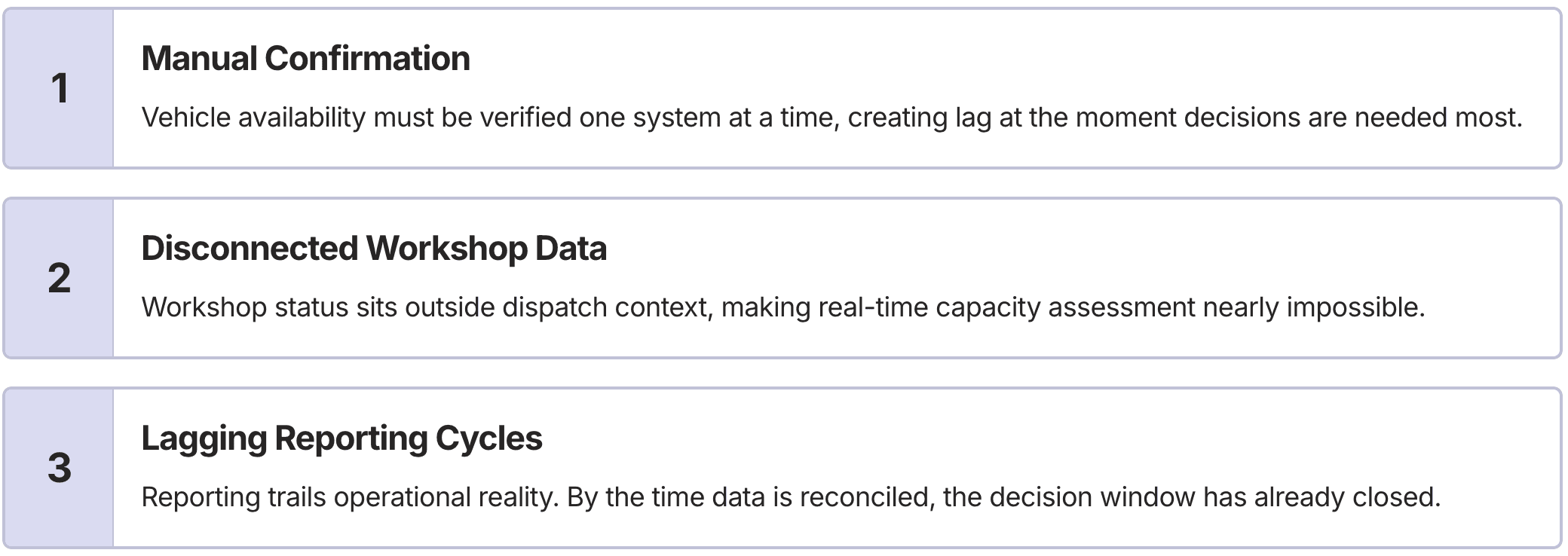
The problem is not a lack of data. It is fragmented operational awareness at the exact moment decisions are made.
Our Point of View
When fleet operations, maintenance activity, cost tracking, and performance analytics are unified into a shared operational view with near-real-time updates, the nature of capacity decisions changes entirely.
Fleet availability is no longer an estimate. It becomes a managed constraint- visible, measurable, and financially actionable.
This shift moves organisations from reactive coordination to controlled financial judgement. The difference is not incremental. It is structural.
How Operating Conditions Create the Problem
Constant interdependencies define large fleet environments. A single vehicle status change ripples across dispatch, workshop scheduling, compliance exposure, and cost per mile.
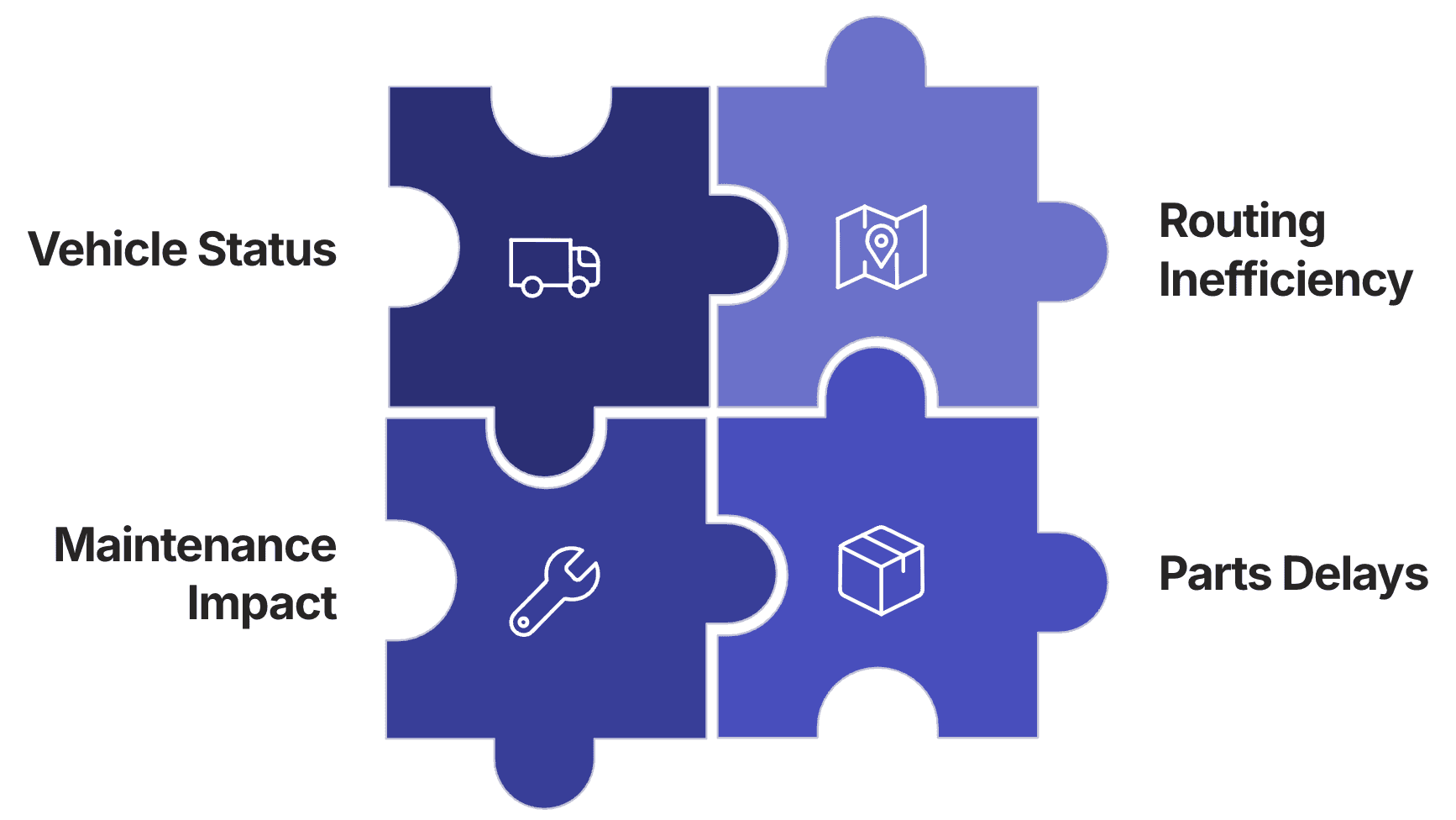
Each of these variables changes throughout the day. Without a unified operational model, the business is always working from a partially complete picture.
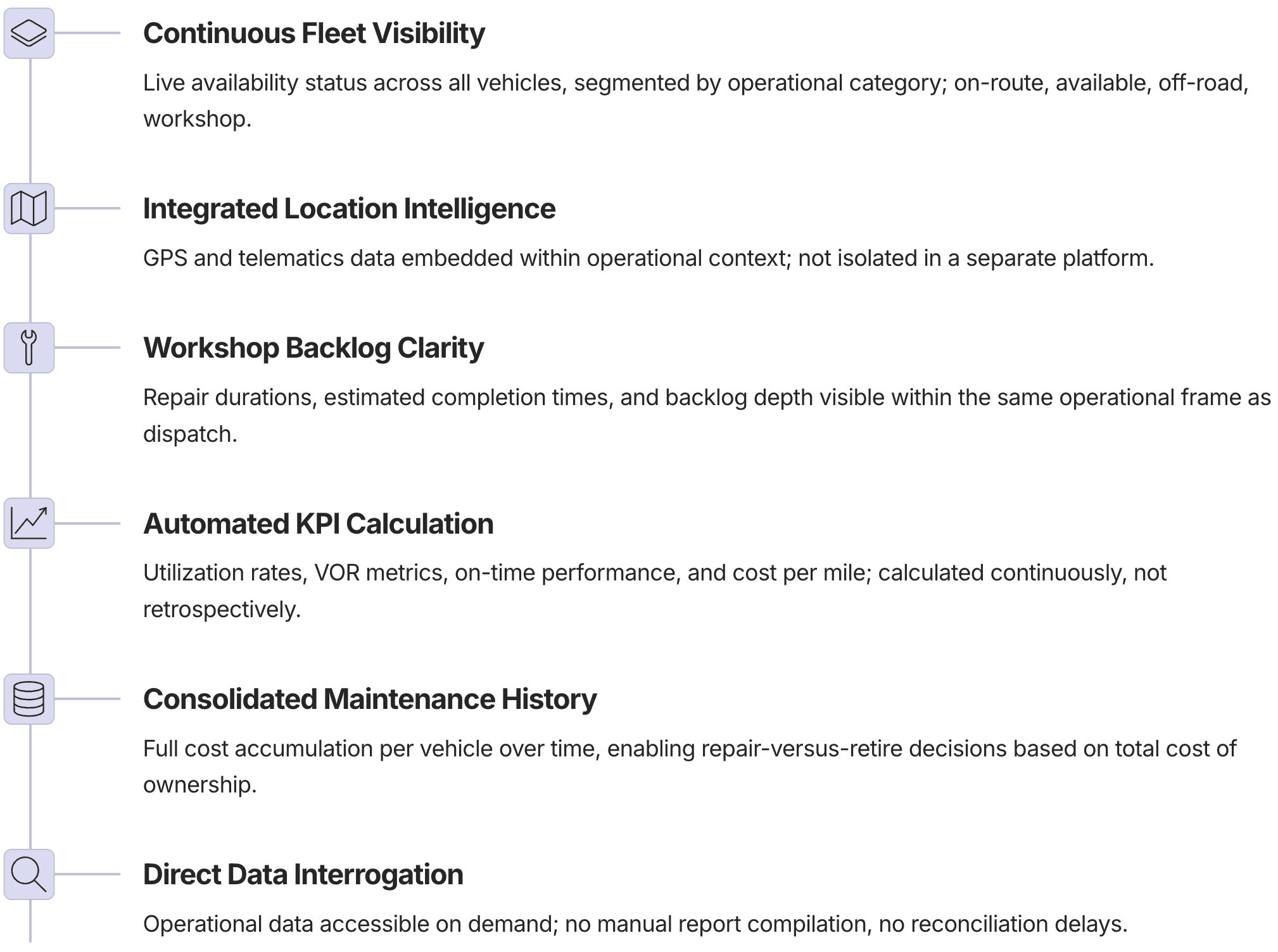
What a Unified Intelligence Model Requires
Operating at fleet scale demands specific capabilities- continuously available, not assembled on request. These are the operational requirements that a unified model must satisfy.
What a Consolidated Solution Actually Delivers
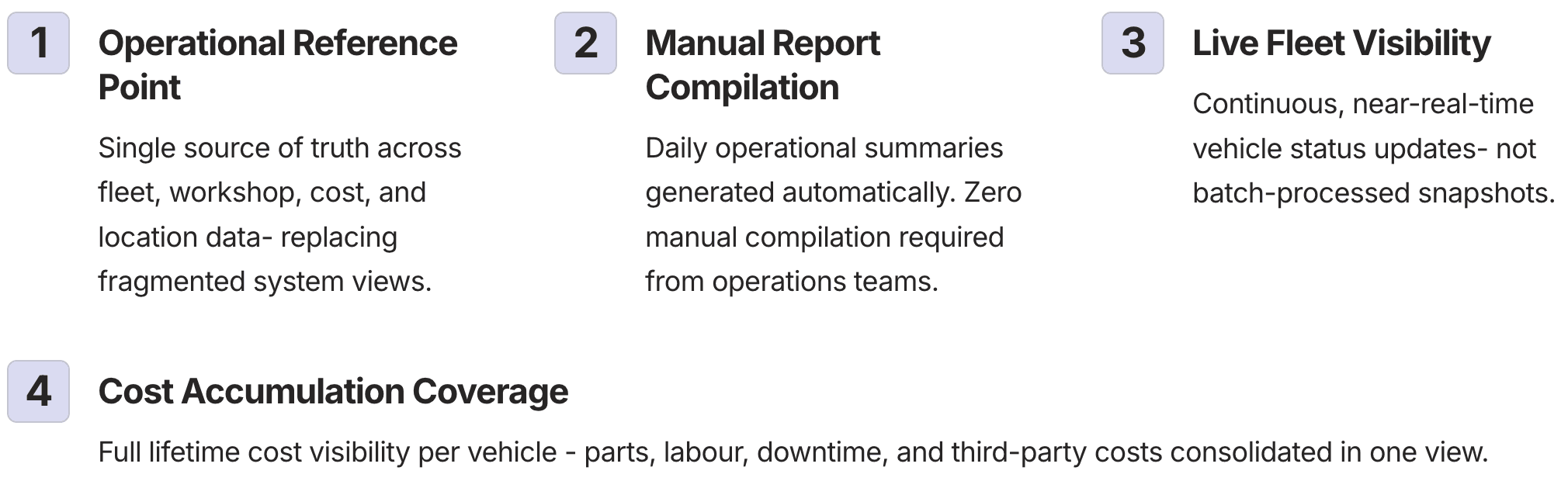
A unified operational intelligence platform is not a better reporting tool. It is a fundamentally different operating model. Here is what it enables- in practice.
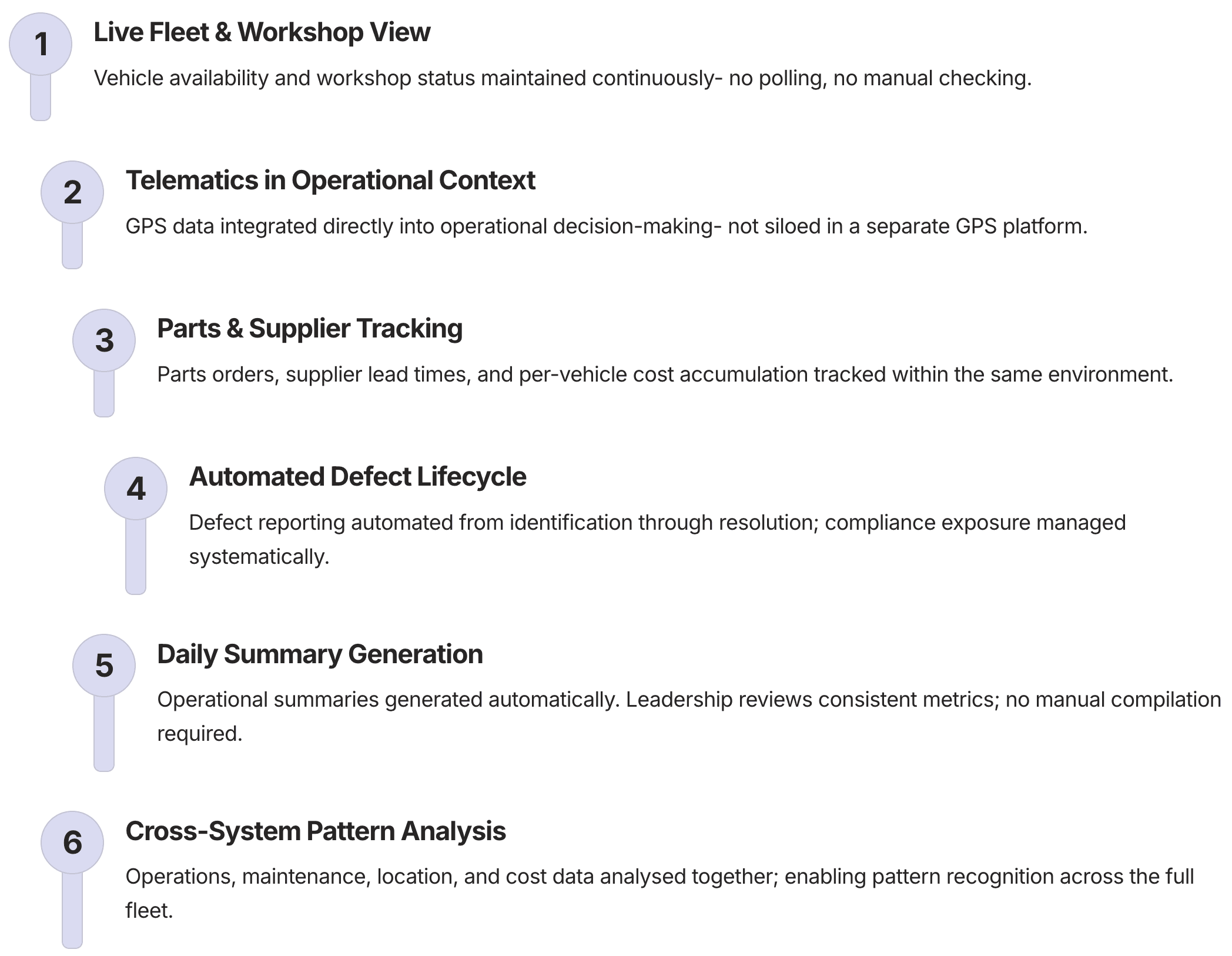
The effect is not improved reporting. It is an altered operating cadence, the organisation runs against a continuously updated model of its own performance.
The Execution Shifts That Follow
When fleet status, maintenance throughput, cost accumulation, and routing performance are visible within one system, specific operational behaviours change. These are not aspirational outcomes; they are structural consequences of unified visibility.
1. Capacity Planning Becomes Dynamic
Availability trends and threshold alerts allow booking decisions to reflect actual fleet state, not assumed capacity based on yesterday's numbers.
2. Dispatch Risk Reduces
Vehicles in workshop or off-road states are visible within the same operational frame as active routes. No dispatch surprises.
3. Workshop Scheduling Aligns with Demand
Backlog and repair duration metrics inform prioritisation in direct alignment with fleet availability requirements.
4. Cost Visibility Extends Beyond Invoices
Total cost of ownership per vehicle becomes observable, informing repair-versus-retire decisions and fleet expansion planning.
5. Manual Reporting Exits the Operating Loop
KPI tracking, daily summaries, and custom analysis are generated automatically. Leadership reviews reality, not reconciled approximations.
Key Performance Outcomes at Fleet Scale
Organisations operating with unified fleet intelligence report measurable improvements across the metrics that matter most to fleet and finance leadership.
Boundaries and Preconditions
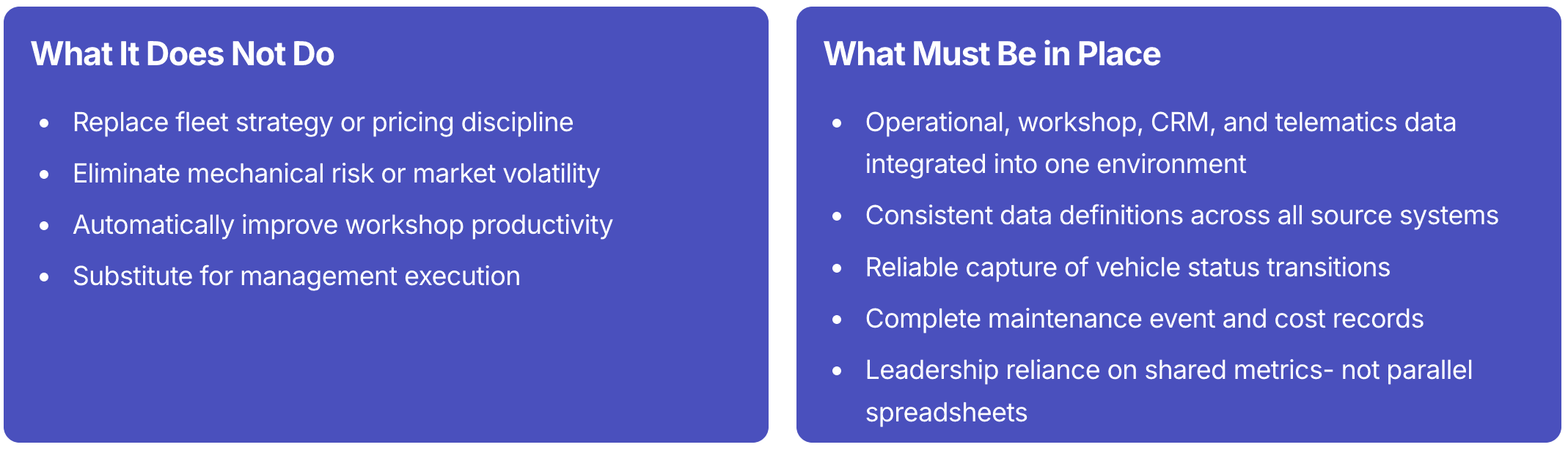
A unified operational intelligence model is not a replacement for strategy. It is a decision support infrastructure. Its effectiveness depends on meeting specific preconditions; these are not caveats, they are implementation requirements.
The Question Is Not Whether Data Exists
For logistics organisations operating at fleet scale, the data already exists. The question is whether operational decisions are made against a unified, continuously updated representation of fleet reality, or against fragmented, reconciled approximations.
When operational intelligence consolidates vehicle availability, workshop throughput, cost behaviour, and performance metrics into a single decision environment, capacity becomes measurable, workshop alignment becomes visible, and cost control becomes systemic.
At that point, accepting new work, scheduling maintenance, expanding fleet size, or reallocating assets are no longer coordination exercises. They are financially informed operating decisions made against a shared operational truth.
