
From Monolith to Microservices: Lessons We Learned in 2025

2025 was the year we finally did it — we broke up with our monolith. After years of debating, hesitating, and patching it just enough to get by, we took the plunge and started breaking it into microservices.
It wasn’t smooth. It wasn’t perfect. But it was necessary. And now that we’ve been living in this new architecture for a while, here are the lessons that stuck with us — the things we wish we’d known earlier, and the ones that made the pain worth it.
Monoliths aren’t the enemy; they just outgrow their shoes
To be honest, our monolith wasn’t terrible. For a long time, it worked. One repo, one pipeline, one deploy. Simple and efficient… until it wasn’t.
As the team and codebase grew, everything started feeling fragile. One feature touched five others. A tiny bug could ripple through the whole system. Deployments were stressful. Testing took forever.
Switching to microservices wasn’t about chasing trends — it was about survival. The monolith just couldn’t stretch any further.
Splitting is easy, splitting well is a whole other game
In theory, breaking an app into services sounds easy: just divide by functionality and you’re done, right? Yeah… no.
We learned (the hard way) that it’s not about where the code lives — it’s about how tightly those pieces depend on each other. At first, we just shuffled things around. But we were still tangled underneath.
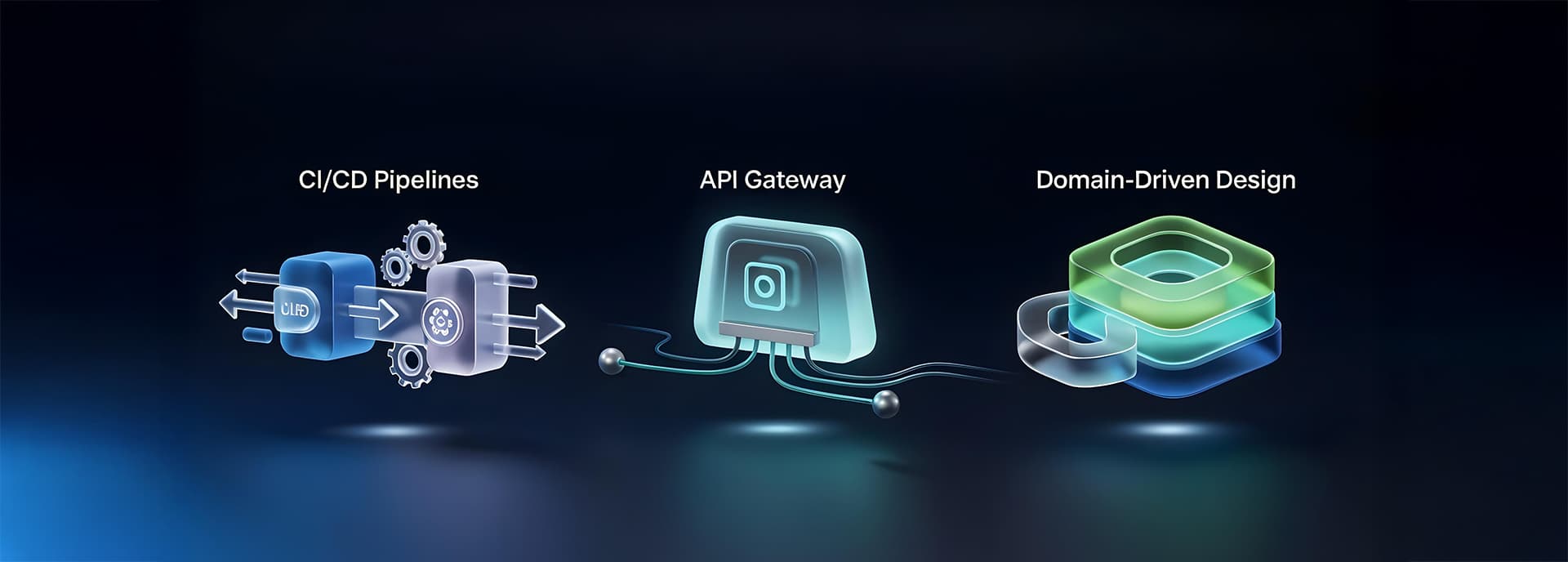
What helped was stepping back and looking at domains instead of features. We leaned on domain-driven design, making sure each service had a clear job, clear data ownership, and minimal outside dependencies. That mindset shift changed everything.
CI/CD isn’t optional, it’s the foundation
Before microservices, our CI/CD was… fine. After microservices? It became a non-negotiable.
We spent weeks just getting our pipelines right. Containers, environment configs, rollback strategies — it was a whole project on its own. But once it was in place? Game changer. Deployments went from scary to “meh.”
Now, pushing code is fast, safe, and boring — and boring is very good when it comes to releases.
You don’t have to break everything
Early on, we went a little too wild. Everything was its own service. Everything got its own repo. It was chaos.
Eventually, we pulled back. We realized that if two parts of the system evolve together, they probably belong together — at least for now. Not everything has to be a microservice. Some things are just fine as modules in a bigger service.
If we could go back, we’d start slower. Test the waters. Break what needs to be broken, not everything just for the sake of it.
Debugging became a full-time job (until we got serious about observability)
With one app, we knew where the logs lived. With 15+ services? It was like chasing ghosts.
Production issues became puzzles — spread across logs, services, queues. It wasn’t fun. So we finally invested in real observability: centralized logging, tracing, metrics. Tools like OpenTelemetry and Grafana Loki made a huge difference.
Don’t wait on this stuff. Seriously.
More services = more attack surface
Every new service we spun up was another door into the system. We quickly realized we needed to take security a lot more seriously — between services, not just at the edge.
We brought in an API gateway, added strict auth between services, rate limiting, and tightened our internal network rules. It’s extra work, but absolutely necessary.
Your org chart shapes your architecture
We didn’t expect this one.
The way our teams were structured influenced how our services ended up looking. Conway’s Law is real — your architecture will mirror your communication paths.
We adjusted. Small, cross-functional teams got end-to-end ownership of services. It made everything smoother: clearer responsibility, faster decisions, and fewer blockers.
Final Thoughts
So… was it worth it? 100%.
Would we do it exactly the same again? Probably not.
The big takeaway? Don’t jump into microservices just because they sound cool. Do it because your system needs it, and when you do, plan like your future self will thank you (because they will).
Take your time. Break things smartly. Invest in your tooling early. And whatever you do, don’t wing it.
We’re still learning, still evolving — but for the first time in a long time, our architecture is helping us grow instead of holding us back.