How GenAI Tools are Reshaping Business Analysis Workflows

In today’s fast-paced digital world, Generative AI (GenAI) is making waves across industries, and Business Analysis is no exception. Generative AI is helping analysts do more than just analyze data, it’s transforming how they gather insights, communicate with stakeholders, and deliver value. Let’s explore how GenAI is revolutionizing business analysis workflows, what challenges come with it, practical solutions for successful adoption, and where this exciting field is headed.
The current state of GenAI in business analysis
Traditionally, Business Analysis has involved detailed data gathering, stakeholder interviews, documentation, and plenty of manual effort. But that’s changing fast. With GenAI tools becoming more accessible, much of this work is now being automated or enhanced by intelligent systems.
Key GenAI applications transforming business analysis
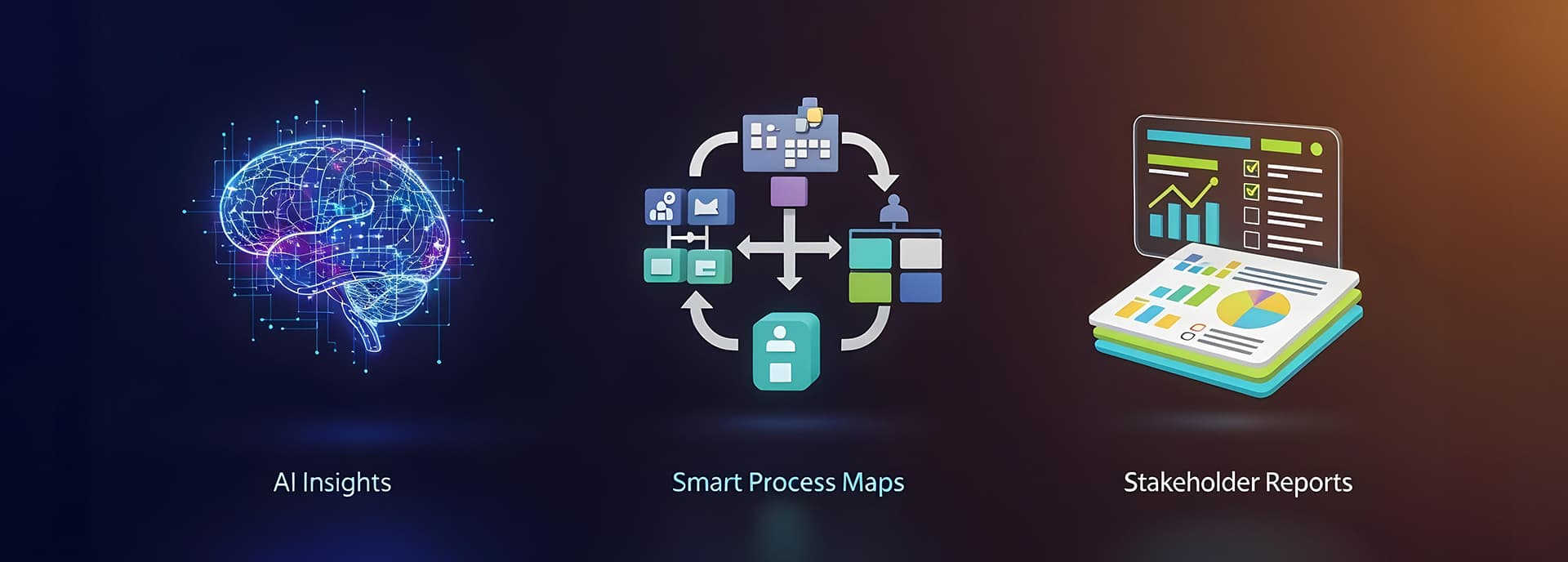
Automated requirements documentationAI tools can quickly generate user stories, acceptance criteria, and requirements documents with minimal input, turning what used to take days into minutes.
AI-driven process mappingGenAI can analyze operational data and automatically generate process maps, identify inefficiencies, and suggest improvements.
Advanced data analysis and insightsAI can comb through large data sets, spot patterns, and present insights in plain English that helps business analysts make smarter decisions.
Tailored stakeholder communication With GenAI, analysts can generate custom reports, executive summaries, and technical documentation, making communication faster and more effective.
Practical challenges of implementing GenAI in business analysis
While GenAI offers powerful capabilities, its integration into business workflows isn’t without roadblocks. Here are some common challenges organizations face:
Ensuring accuracy and quality control
AI tools can sometimes "hallucinate" or generate incorrect content. Analysts need robust review processes to verify outputs and ensure alignment with real business needs.
Building stakeholder trust
Some stakeholders remain wary of AI-generated content, especially when it influences key business decisions or project documentation.
Tool integration limitations
GenAI may not integrate easily with legacy systems or established BA tools, creating friction and additional development work.
Upskilling and learning curve
Business analysts must learn new skills, like prompt engineering and AI output validation, to fully leverage GenAI.
Proven strategies and best practices for success
Leading companies are approaching GenAI implementation with strategy, structure, and people-first thinking. Here’s what’s working:
Human-AI collaboration over replacement
The best results happen when AI supports analysts, not replaces them.
Use AI to draft, then have analysts review and refine.
Define clear roles: where AI adds value, and where human judgment is critical.
Start small, then scale
Pilot AI in low-risk areas first. Measure results, get feedback, and expand where it works best.
Invest in analyst training
Offer practical training in GenAI tools, prompt design, and AI validation. Empower analysts to use AI effectively, not just passively.
Build validation and governance frameworks
Use structured peer reviews and data checks to validate AI-generated content. Make sure analysts understand where AI data comes from.
What’s next for business analysis in the GenAI era
GenAI is not just improving workflows—it’s changing the very role of the business analyst.
A shift toward strategic thinking
Business analysts are becoming strategic partners, focusing more on high-value work and less on documentation. They’re helping guide AI tools to align with business context and outcomes.
Real-time, dynamic requirements
Requirements are no longer static. They evolve dynamically as AI analyzes feedback, user behavior, and system performance.
Predictive and proactive analysis
AI allows analysts to anticipate issues, model future scenarios, and build smarter, more forward-looking strategies.
More accessible analytics for all
AI tools are democratizing analytics. Non-technical stakeholders can now ask questions, get insights, and contribute directly, while analysts handle the complex, strategic work.
Conclusion:
The future of business analysis is AI-augmented, not AI-replaced
The rise of GenAI marks a major turning point for the business analysis profession. Instead of replacing analysts, AI is helping them evolve into more strategic, high-impact roles. The future belongs to those who embrace GenAI as a powerful collaborator—and who continue to sharpen the human skills that AI can’t replicate: critical thinking, empathy, ethical judgment, and strategic vision.