The Quantum Leap: Understanding the Future of Computing

"Imagine solving in seconds what today's best supercomputers would take millennia to compute—that's the promise of quantum computing."Quantum computing is no longer a far-off theoretical concept—it's becoming a transformative force across multiple industries. By leveraging the principles of quantum mechanics, quantum computers promise to tackle problems that are beyond the scope of classical machines. In this blog, we'll explore the current landscape of quantum computing, its real-world applications, some detailed tasks it's tackling, and the latest advancements shaping its future.
1. Cloud Access & commercialization
The journey from laboratory experiments to commercial use has accelerated significantly. Major tech companies like IBM, Google, and Microsoft have rolled out cloud-based quantum computing platforms. These services democratize access, allowing researchers, developers, and students to run quantum algorithms without needing specialized hardware. For instance, IBM’s Quantum Experience allows users to experiment with 5 to 127-qubit systems through a browser interface, while Microsoft's Azure Quantum supports multiple backends, including Ionq and Quantinuum.
These platforms are enabling experiments on quantum Fourier transforms, Grover's algorithm for search optimization, and even hybrid quantum-classical workflows used in finance and chemistry.
2. Approaching quantum advantage
Quantum advantage—also called quantum supremacy—refers to the point when a quantum computer performs a task faster than the best classical supercomputers. Google claimed to have achieved this milestone in 2019 with its 53-qubit Sycamore processor, completing a specific sampling task in 200 seconds that would take a classical supercomputer approximately 10,000 years.
Since then, researchers have refined both quantum and classical algorithms, narrowing this gap, but Sycamore remains a landmark achievement. Other companies are working on practical quantum advantage for optimization problems, such as solving instances of the Max-Cut problem or portfolio risk optimization, which are computationally intensive for classical systems.
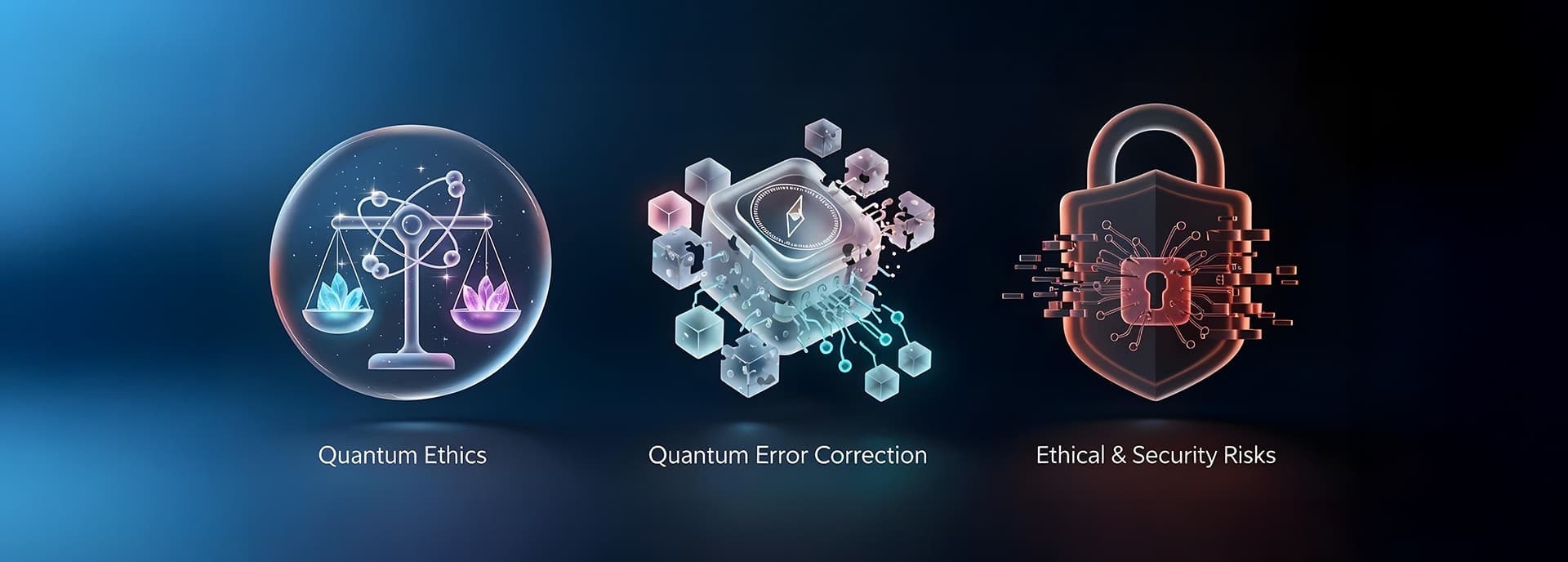
3. Quantum error correction
One of the fundamental challenges in building scalable quantum computers is error correction. Quantum systems are extremely sensitive to environmental noise, and even the slightest disturbance can lead to computational errors. A single logical qubit may require thousands of physical qubits for fault-tolerant computing.
New techniques in quantum error correction are emerging. Surface codes, for instance, are a leading candidate that can correct both bit-flip and phase-flip errors. Google recently demonstrated a logical qubit with an error rate lower than its physical counterparts—an important milestone in making quantum systems more stable.
4. Real-world applications and specific use cases
Quantum computing is not just theoretical—it is being actively applied in solving real problems. Some key sectors and specific tasks include:
Cryptography: Shor’s algorithm can factor large numbers exponentially faster than classical algorithms. For example, factoring a 2048-bit RSA key, which would take classical systems billions of years, could theoretically be done in minutes with a sufficiently large and stable quantum computer.
Drug Discovery: Quantum simulations allow modeling of protein folding and molecular binding energy. For instance, simulations of lithium hydride (LiH) and beryllium hydride (BeH2) have been performed on quantum hardware—early steps toward more complex biomolecules.
Optimization: Quantum Approximate Optimization Algorithm (QAOA) has been tested on solving traffic flow optimization in metropolitan networks. A study showed potential improvements in travel time estimation by up to 20%.
Material Science: Researchers at IBM used a quantum computer to model the electronic structure of a beryllium molecule, paving the way toward simulating high-temperature superconductors.
5. Quantum ethics: balancing power with responsibility
As quantum computing evolves, it brings with it not just technical promise, but also ethical and societal challenges. Here are a few key areas of concern:
Breaking Cryptography: With quantum algorithms like Shor’s threatening to break RSA encryption, our digital infrastructure is at risk. Data encrypted today could be vulnerable tomorrow unless post-quantum cryptography is widely adopted in time.
Inequality of Access: Quantum resources are costly and require deep technical expertise. There's a risk that only wealthy nations and tech giants will benefit—leaving developing regions and smaller institutions behind.
Workforce Displacement: Automation and quantum-accelerated algorithms could disrupt traditional roles in logistics, modeling, and more. Education systems must evolve to support quantum literacy and workforce reskilling.
Scientific Responsibility: Quantum simulations might speed up drug development or materials discovery, but could also be misused to develop advanced weapons or unsafe compounds.
Lack of Regulation: There’s currently little global governance around quantum development. Questions remain about who should regulate usage, ensure security, and promote ethical applications.
As we inch closer to quantum maturity, creating strong international frameworks and inclusive access programs will be crucial in ensuring that quantum progress benefits all of humanity, not just a select few.
The road ahead
Quantum computing is still in its infancy, but its potential is immense. As researchers continue to improve hardware stability, develop error correction methods, and create accessible platforms, we edge closer to a new era of computation.
Realistically, fault-tolerant quantum computing may require systems with millions of qubits, and that could still be a decade away. However, near-term quantum devices, known as Noisy Intermediate-Scale Quantum (NISQ) machines, are already unlocking insights and shaping the quantum workforce of tomorrow.
Stay tuned—this is just the beginning of the quantum revolution.