
3 mins readJune 17, 2025

Do you remember when security used to be the final checkpoint before deployment? That last-minute stop where the security team would run scans and either grant approval or send developers back to fix issues?
Those days are gone and rightfully so.
In today’s world of continuous integration and continuous deployment (CI/CD), security cannot be treated as an afterthought. It must be embedded into every pipeline, every commit, and every deployment stage. Waiting until the end isn’t just risky. It’s expensive.
Picture this: Your development team has spent weeks building features, fixing bugs, and meeting sprint goals. The code is ready, the pipeline passes, and then a critical security vulnerability is discovered.
Now you're facing delays, emergency patches, and frustrated developers forced to revisit old code. It’s inefficient and costly. Research shows that fixing vulnerabilities in production can cost 30 times more than catching them during development.
And while your team scrambles to fix things, your competitors are shipping features, and your users are left waiting.
Embedding security into your CI/CD pipeline doesn't slow you down. In fact, when done right, it becomes a seamless part of your workflow, just like running unit tests.
Here’s how modern teams are doing it:
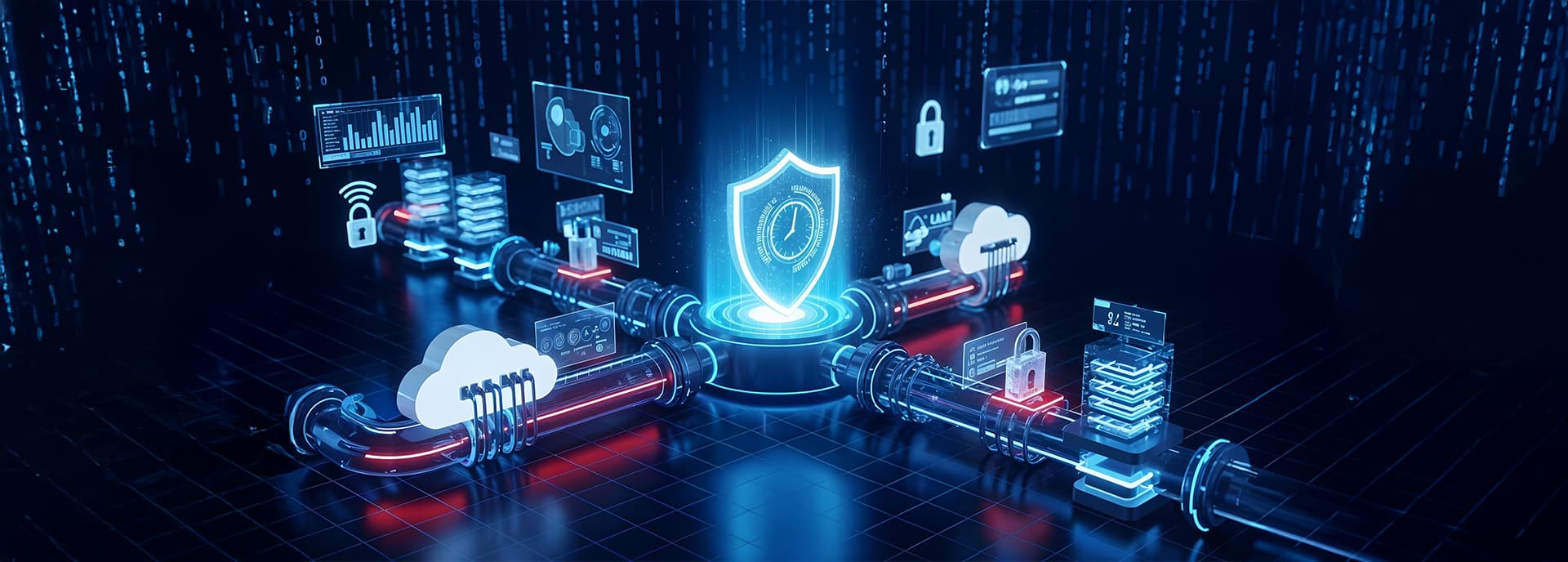
• Static Application Security Testing (SAST): Automatically runs on every commit to catch vulnerabilities early.
• Dependency Scanning: Flags risky third-party libraries the moment they're introduced.
• Infrastructure as Code (IaC) Scanning: Secures cloud configurations before they reach production.
• Dynamic Testing: Simulates real-world scenarios in staging to catch runtime issues early.
When these tools are integrated smoothly, developers get real-time feedback, security teams maintain visibility, and everyone can focus on building quality software.
Here’s the real challenge: Integrating security into CI/CD isn't primarily a technical problem. It’s a cultural one.
Developers need to think about security from day one, not treat it as a separate phase. Likewise, security teams must stop being the "department of no" and become collaborators. That means providing tools, training, and support that make secure coding easier, not harder.
When developers understand the why behind security practices and are equipped with the right tools, security becomes a natural part of development, not a roadblock.
Organizations that adopt this mindset don’t just release more secure software. They release faster.
When security is baked into the pipeline, bottlenecks disappear. There’s less backtracking, fewer surprises, and more confidence throughout the team.
Just look at Netflix. They deploy thousands of times a day without compromising security. Not because they added gates, but because they built security into the process itself.
The result? Faster time-to-market, fewer breaches, and happier developers.
You don’t need to overhaul everything at once. Start with a few simple, high-impact steps:
• Automatic Secrets Scanning: Prevent API keys and tokens from slipping into your codebase.
• Basic Dependency Scanning: Identify known vulnerabilities early.
• Security Linting: Enforce secure coding practices with minimal friction.
The key is to keep these checks fast, actionable, and integrated into your current toolset. If a security step slows your build more than it helps, it’s time to rethink it.
One vulnerability can cost millions and make headlines. Security cannot wait.
It must be part of your development DNA, not something you add at the end. By integrating security directly into your CI/CD pipeline, you empower your team to move fast with confidence and clarity.
This isn’t just a smart move. In today’s competitive environment, it’s essential.
Ready to make security seamless in your workflow? Let’s talk. We’ll help you integrate security without slowing down your delivery.