.png)
The Security Blanket of Software: Crafting Functional Requirements for Resilient Systems

Introduction :
In an era where cyber threats and system failures can disrupt businesses within seconds, building resilient software systems is more crucial than ever. At the heart of these robust systems lies a well-documented set of functional requirements—the true security blanket of any software solution. These requirements don’t just define what a system should do; they establish a clear roadmap that ensures software is secure, stable, and scalable.
For companies like 2Base Technologies, delivering reliable and future-proof digital solutions means taking functional requirements seriously, from ideation to deployment.
Why functional requirements matter
Functional requirements outline the specific behavior, functions, and processes a system must support. They are the foundation of any successful software product, directly influencing:
System reliability
Security enforcement
User experience consistency
Scalability and integration readiness
By clearly defining how software should handle data, users, operations, and exceptions, these requirements act as a safety net against ambiguity, missed expectations, and security loopholes.
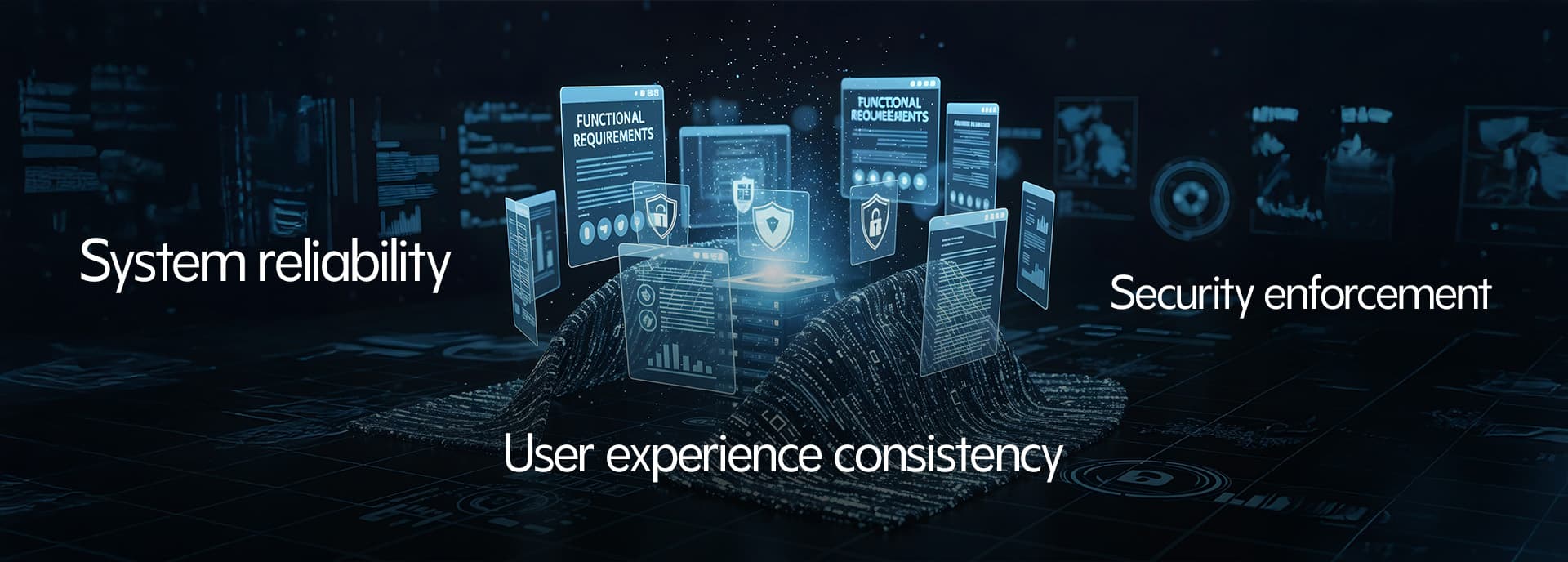
Crafting resilient systems through clear requirements
To build a resilient system, you need to ask the right questions:
What should the system do under normal conditions?
How should it behave when errors occur?
How are users authenticated and authorized?
What data should be encrypted, stored, or backed up?
How should the system recover from failures?
These are not just technical questions—they are business-critical discussions that shape the success of the software.
At 2Base Technologies, our Business Analysts and Development teams work hand-in-hand to translate client visions into detailed functional documents. These documents include:
Use case scenarios
Data flow diagrams
Authentication & access control guidelines
Failover & redundancy strategies
The link between functional requirements and security
Security is not a feature you bolt on at the end; it's a design principle that starts with requirements. Incorporating security into functional requirements ensures:
Authentication protocols are embedded from day one
Data privacy policies are honoured in all data transactions
Access control rules are clearly defined and role-based
Exception handling covers unauthorized access, expired sessions, and data breaches
By addressing these factors upfront, development teams reduce vulnerabilities and build trust with end users.
Best practices for writing functional requirements
Creating bulletproof functional requirements takes skill, collaboration, and a user-focused mindset. Here are some industry best practices:
Be Specific, Not Vague: Avoid assumptions. Describe exactly what the system should do.
Use User Stories and Acceptance Criteria: These bring clarity and testability.
Collaborate Cross-Functionally: Involve developers, testers, UX designers, and business stakeholders.
Keep the End-User in Focus: Functional requirements should align with real-world usage and scenarios.
Version Control and Change Management: Maintain traceability and adaptability as the system evolves.
Real-world scenario: e-commerce security
Let’s consider a real-world example—an e-commerce application. Crafting functional requirements for such a system includes:
Secure user registration and login with multi-factor authentication
Role-based access to dashboards (admin, seller, buyer)honoured
Secure payment gateway integration
Order management with transactional integrity
Handling of system timeouts and session expirations
Each of these requirements adds a layer of resilience to the software, making it robust against malicious activities and system failures.
Conclusion
Software resilience is not accidental—it’s intentional. By embedding security and clarity into your functional requirements, you lay the groundwork for software that performs under pressure, adapts to change, and protects stakeholders.
At 2Base Technologies, we understand that resilient systems begin with resilient planning. Our approach to requirement engineering ensures that your software is not just functional—it’s secure, future-ready, and built to last.
Are you looking to build software that stands the test of time? Let’s start with the right requirements.