How AI is Transforming SEO: Smarter Strategies for Modern Search Optimization

SEO has become a moving target. Just when you optimize for one trend, another emerges. With shrinking attention spans and changing algorithms, traditional tactics just don’t cut it anymore.
Imagine this: You’re an SEO strategist, deep into a campaign. You’ve spent hours researching keywords, tweaking metadata, analysing backlinks, and running technical audits. When you think you’re ahead, a new algorithm update drops, throwing all your hard work into question.
It feels like running on a treadmill that never stops. Sound familiar?
The truth is, SEO is no longer just about rankings—it’s about efficiency. The professionals who win aren’t necessarily working harder; they’re working smarter. And the secret? Artificial intelligence is simplifying the heavy lifting, freeing up time for strategy, creativity, and big-picture results.
The problem: SEO is getting more complex
Not long ago, SEO was straightforward. Find the right keywords, write a few solid articles, build links, and watch traffic roll in. But today, the competition is fierce, user behavior is shifting, and Google’s algorithms demand more sophistication.
Manual methods no longer cut it. SEO specialists spend hours sifting through spreadsheets, analyzing SERP trends, and running audits. Without automation, scaling an SEO strategy becomes nearly impossible.
That’s where AI-powered systems come in.
The breakthrough: AI-powered SEO without the extra workload
Imagine having an assistant who scans the entire internet, monitors keyword trends, analyzes competitor movements, and even suggests content improvements—24/7. That’s what AI tools like ChatGPT, DeepSeek AI, Clearscope, and SurferSEO do.
These systems aren’t replacing SEO experts; they’re amplifying their impact. Instead of getting bogged down with data collection and manual research, AI provides instant insights, allowing professionals to focus on execution and results.
How AI is transforming SEO workflows
Here’s how AI is actively changing how SEO professionals work:
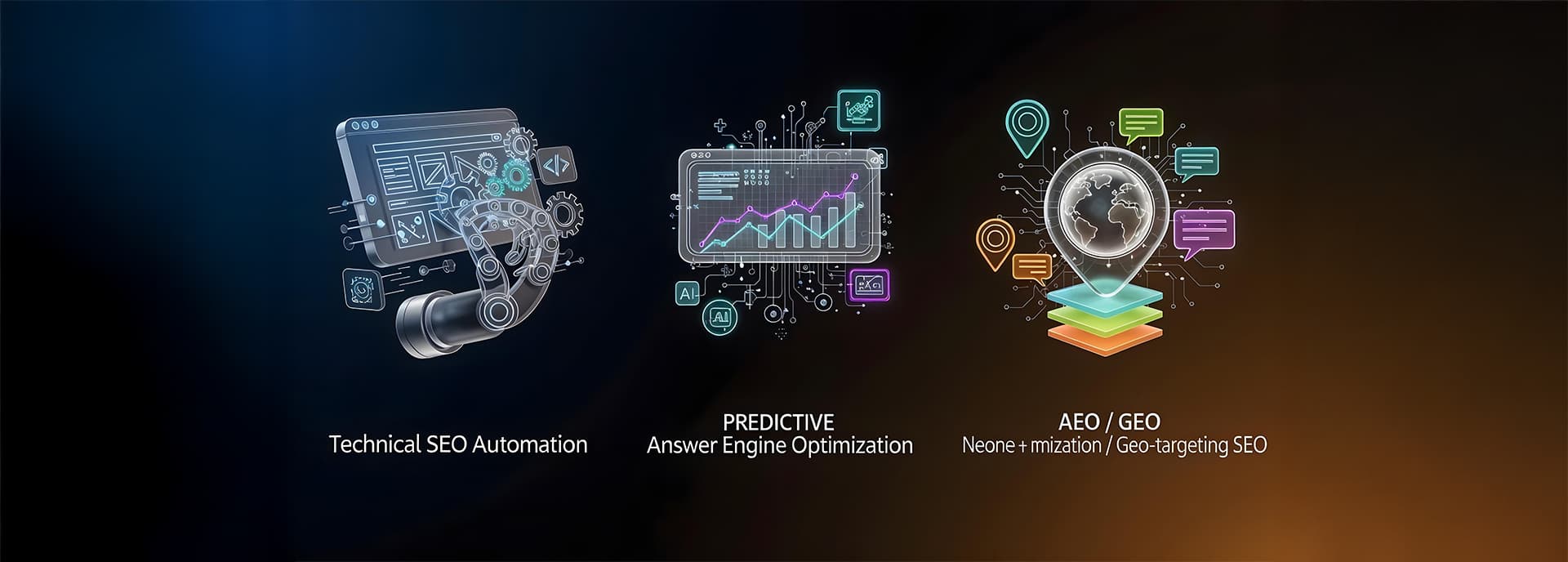
1. Predictive content planning with AI
- Old way: Keyword research involved manually analyzing search volume, competition, and trends.
- AI-powered way: Tools like Frase and MarketMuse analyze search behavior and competitor content to suggest high-performing topics before they trend.
- Example: Instead of guessing which blog topics will drive traffic, AI-driven content planning tools provide a blueprint based on real-time search patterns.
- 2. Smarter keyword targeting & SERP analysis
- Old Way: SEOs had to manually track ranking fluctuations and search term variations.
- AI-powered way: Platforms like Ahrefs’ AI-driven Keyword Explorer and Semrush’s AI-based
- Keyword magic tool predict ranking difficulty and user intent with deep learning.
- Example: AI tools can analyze the top 100 SERP results instantly, identifying ranking gaps and keyword opportunities that traditional research methods might miss.
3. AI-assisted content optimization
- Old way: SEOs optimized content by manually checking readability, keyword density, and meta tags.
- AI-powered way: SurferSEO and Clearscope provide AI-driven content scoring, helping writers fine-tune blog posts for search engines while maintaining natural readability.
Example: AI can suggest LSI (Latent Semantic Indexing) keywords, optimal content length, and readability improvements to boost rankings effortlessly.
4. Effortless backlink outreach & PR
- Old way: Finding high-authority backlinks required time-consuming manual outreach.
- AI-powered way: Tools like Respona and Pitchbox use AI to scan backlink profiles, suggest personalized outreach emails, and even automate follow-ups.
Example: Instead of sending 1,000 cold emails manually, AI filters the best link-building prospects and crafts data-backed, high-conversion outreach messages.
5. Automated SEO health checks & technical audits
- Old way: Running SEO audits took hours, with specialists manually fixing issues like broken links, slow load speeds, and duplicate content.
- AI-powered way: Screaming Frog, Google Search Console Insights, and DeepCrawl detect and even prioritize issues that need immediate attention.
Example: AI can instantly generate a list of pages with broken schema markup, suggest fixes, and automate technical SEO improvements.
Real-world impact: what AI means for SEO professionals
By integrating AI-driven SEO tools, professionals are cutting hours of manual work, gaining deeper insights, and improving efficiency. Instead of spending time on repetitive tasks, they can focus on strategy, creativity, and conversion-driven optimization.
This isn’t about AI replacing SEO expertise; it’s about maximizing it.
When AI handles data-heavy tasks, SEO experts can focus on crafting campaigns that drive real results.
Final thought: adapt or fall behind
SEO is evolving, and AI is at the forefront of this transformation. The best in the industry are already leveraging AI-powered tools to refine their strategies, optimize their content, and outrank the competition.
The question is—will you harness AI’s potential, or will you be left struggling to keep up? Because in SEO, success isn’t about how much you do. It’s about how smartly you do it.