
Beyond Functional Checks

How Non-Functional BA Insights Can Define UAT Success
Despite rigorous functional testing, new products often face an unexpected decline in user adoption and satisfaction shortly after launch. Issues such as sluggish performance, complex navigation, and system instability frequently emerge. This disparity highlights a common oversight: the disproportionate emphasis on what a system does versus how it performs and the overall user experience it delivers. A functionally sound product that is slow, unintuitive, or unreliable will ultimately fail to meet user expectations.
Differentiating Functional and Non-Functional Requirements
Functional Requirements delineate the specific behaviors, actions, and capabilities that a system must perform. These requirements define the core features and processes integral to the system's operation and direct fulfillment of user needs.
Examples in a software context include:
• User authentication and login processes.
• The ability to add items to a shopping cart.
• Accurate data input, processing, and storage mechanisms.
• Generation of specific reports or notifications.
Non-functional requirements (NFRs) pertain to the quality attributes and performance characteristics of the building. This encompasses comfort, safety, natural light, and ease of movement. In software development, NFRs include:
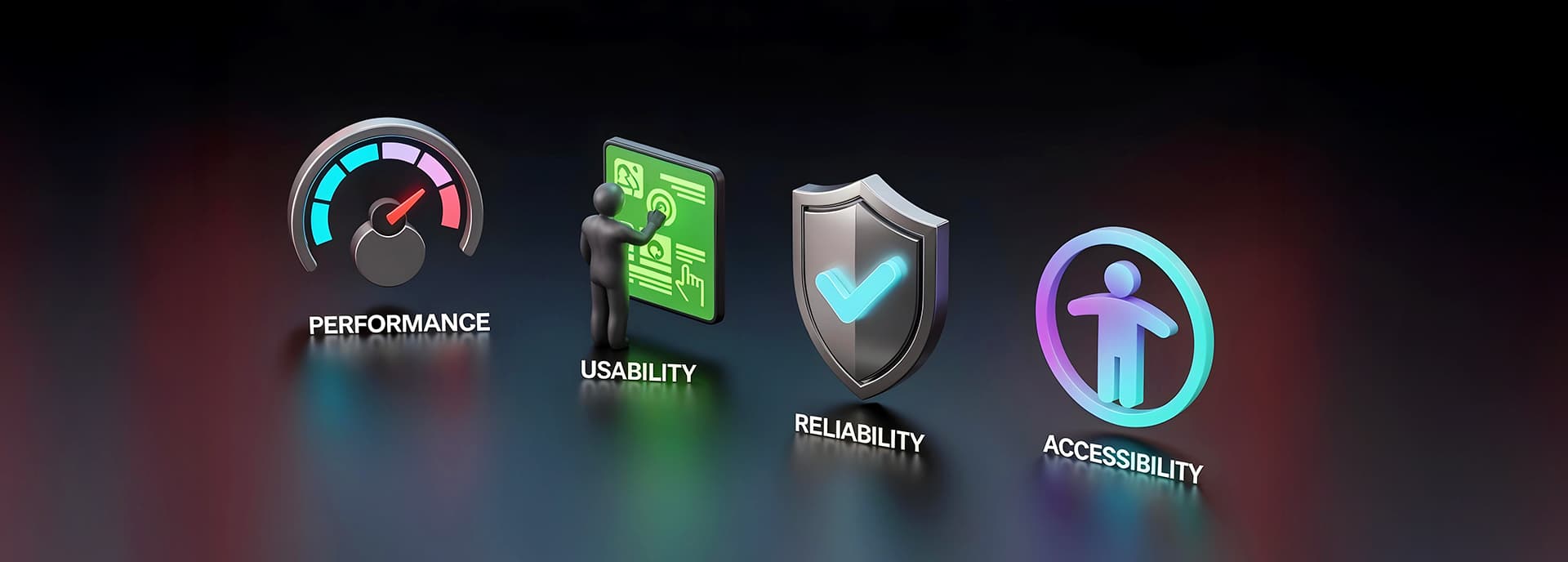
• Performance: Responsiveness of page loads, system scalability under high user loads.
• Usability: Intuitive navigation, ease of task completion.
• Security: Data protection, vulnerability mitigation.
• Reliability: System stability, frequency of crashes.
• Accessibility: Usability for individuals with diverse abilities.
The Strategic Role of the Non-Functional Business Analyst
The Non-Functional Business Analyst (BA) plays a pivotal, yet often understated, role in ensuring comprehensive product quality. While functional BAs define the "what," non-functional BAs critically assess the "how." Their inquiries extend beyond basic functionality to explore the nuances of user interaction: "How quickly does this button respond?" "Is the user feedback clear after this action?" "Can a user with visual impairment effectively interact with this element?"
Non-functional BAs act as proactive quality assurance, identifying potential bottlenecks and user experience deficiencies before they manifest post-launch. They are instrumental in translating implicit user expectations into measurable quality attributes, thereby ensuring the product not only works but excels in real-world scenarios.
Illustrative Cases of Non-Functional Impact
Several practical examples underscore the critical impact of non-functional insights:
• Performance Optimization: In an internal application, functional testing showed that data entry was efficient. However, a non-functional BA's analysis revealed that concurrent peak-hour usage by hundreds of users would severely degrade system responsiveness. Pre-launch server capacity adjustments averted significant productivity losses and user frustration.
• Enhanced Accessibility: For a public-facing portal, all forms were functionally complete. An accessibility-focused BA identified that error messages were not compatible with screen readers. A minor adjustment ensured inclusivity and significantly improved the experience for visually impaired users.
• Improved User Feedback: In a financial application, a "transaction failed" message was technically correct. A non-functional BA advocated for a more detailed message, such as "Transaction failed: Insufficient funds. Please check your account balance." This modification significantly reduced support inquiries by providing users with actionable information.
These instances highlight that non-functional considerations are not about rectifying broken features but about refining and elevating the overall user experience.
Conclusion
As you approach UAT sign-off, it is imperative to consider whether your assessment encompasses both functional and non-functional aspects. Genuine UAT success is achieved when the product is poised to deliver a consistently high-quality experience, fostering user loyalty and driving sustained engagement.
To ensure your next digital product achieves not just functional compliance but also exceptional user satisfaction and market success.