AI vs AI: Cybersecurity in the Age of Intelligent Threats

We’ve entered a new era in cybersecurity, where artificial intelligence isn’t just a tool for defence, but also a weapon wielded by cybercriminals. It’s no longer just humans versus machines. It’s AI versus AI.
As attackers adopt intelligent technologies to launch faster, more adaptive threats, defenders must respond with equally advanced systems. This ongoing digital arms race is reshaping the future of cybersecurity—and the stakes have never been higher.
The rise of AI-driven cyber threats
Cyberattacks have evolved far beyond simple viruses or brute-force attacks. Today’s threats are powered by artificial intelligence, making them smarter, faster, and significantly more dangerous. Attackers are leveraging AI to automate and scale their malicious efforts with unprecedented efficiency.
Here’s how:
1. Hyper-realistic phishing emails
With natural language processing (NLP), AI can craft phishing emails that mimic legitimate communication in tone, structure, and style, making scams much harder to detect.
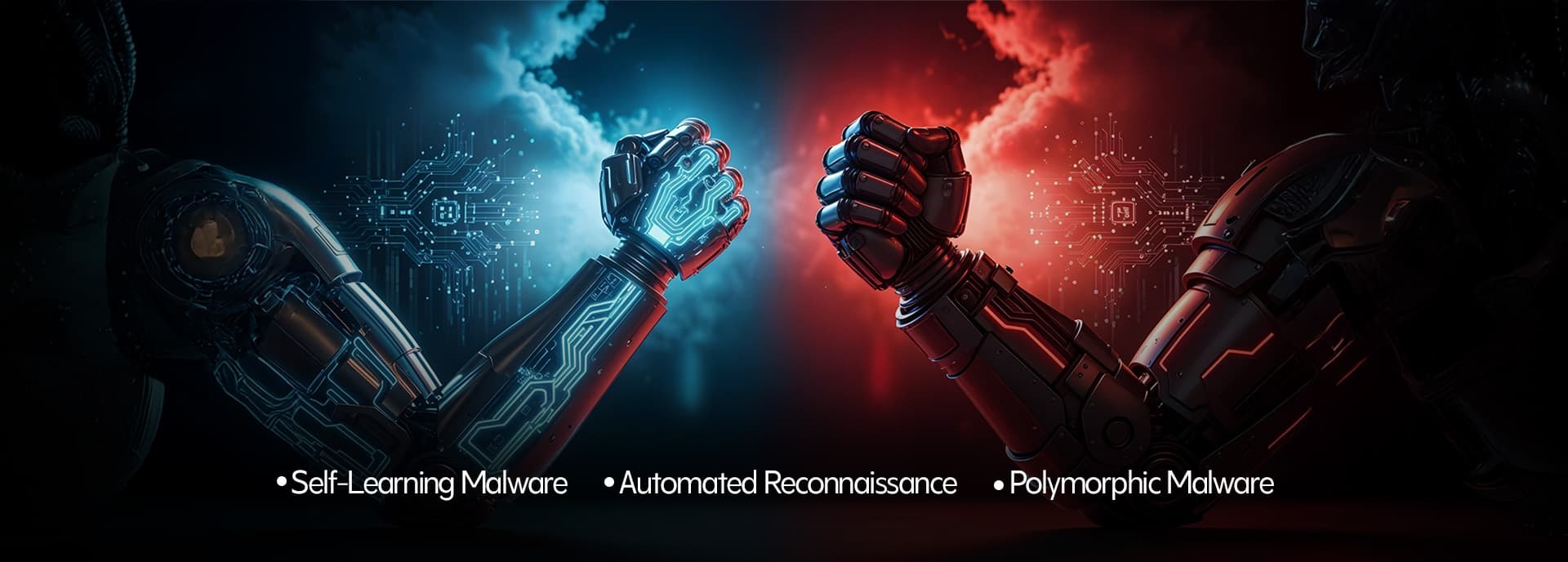
2. Self-learning malware
AI-powered malware can learn from its environment, adjusting its behaviour in real-time to evade traditional security systems—something static code simply can’t do.
3. Automated reconnaissance
AI scans thousands of systems in minutes, identifying vulnerabilities, outdated software, or misconfigurations. This gives attackers a detailed blueprint for exploitation.
4. Deepfake content for social engineering
Sophisticated AI-generated audio, video, and images are now being used to impersonate trusted individuals—making social engineering attacks more convincing and dangerous than ever.
5. Polymorphic malware
AI enables malware to constantly change its code structure, effectively bypassing signature-based detection mechanisms used by traditional antivirus software.
6. Automated exploits
Machine learning models can rapidly discover and exploit software vulnerabilities—dramatically reducing the time between vulnerability discovery and attack.
How AI is transforming cybersecurity defense
To fight fire with fire, organizations are now turning to AI to enhance their cybersecurity defences:
Real-Time Threat Detection AI analyses vast volumes of network data, instantly identifying anomalies and potential breaches to ensure early detection.
Automated Incident Response AI-driven systems accelerate containment and mitigation efforts, minimizing downtime and damage.
Enhanced Forensics & Root Cause Analysis AI tools simplify post-attack investigations, helping teams understand how breaches happened and how to prevent them.
Reduced Analyst Workload By automating routine tasks, AI enables cybersecurity professionals to focus on high-impact areas like strategy, threat hunting, and response planning.
Challenges in the AI cyber arms race
While AI strengthens defences, it also introduces new complexities and vulnerabilities:
Data Poisoning Attackers can manipulate the data used to train AI models, leading to false positives or missed threats.
Lack of Explainability Many AI models function as “black boxes,” making it difficult to interpret decision-making logic—raising concerns around trust, compliance, and accountability.
Rapid Escalation of Threats As defenders upgrade, so do attackers. This constant evolution makes staying ahead of threats increasingly difficult.
Organizations must adopt agile, transparent, and secure AI systems to stay ahead in this fast-moving landscape.
Best practices for cybersecurity in the AI era
To effectively protect your digital assets and showcase cybersecurity leadership, organizations should:
Focus on User Intent: Address specific problems and questions your audience is searching for, such as solutions to AI-driven threats or best practices for AI-powered defence.
Use Clear, Natural Language: Avoid jargon where possible and write in a conversational tone for better readability and SEO performance.
Structure Content for Scannability: Use headings, subheadings, bullet points, and short paragraphs to make content easy to navigate.
Optimize for Voice and Mobile Search: Incorporate long-tail, question-based keywords and ensure your blog is mobile-friendly.
Demonstrate Authority: Cite credible sources, highlight your company’s expertise, and update content regularly to build trust and improve rankings.
Leverage Topic Clusters: Create pillar pages on broad cybersecurity topics and link related posts to show comprehensive expertise.
Conclusion
We’ve officially entered the age of AI vs AI—a time where digital threats are no longer static or predictable, but intelligent, adaptive, and constantly evolving. In this high-stakes cybersecurity battlefield, traditional defences are no longer enough. Organizations must now adopt equally smart, AI-driven security strategies to stay protected.
At 2Base Technologies, we recognize the critical role AI plays in shaping the future of cybersecurity. That’s why we deliver cutting-edge, AI-powered solutions designed to protect, adapt, and scale with your business. Whether you're looking to strengthen your defences, detect threats faster, or stay one step ahead of cyber attackers, our team is here to help.
Get in touch with us today—and take the first step toward securing your digital future with confidence.